

Blog
The torque wrench is one of the most widely used measuring tools in the manufacturing industry, in industrial maintenance, and in any process where torque control is critical to quality or safety. Yet choosing the right torque wrench is no trivial matter; there are dozens of types on the market, each with different operating principles, torque ranges, and varying levels of precision.
At SIRA S.p.A., we distribute and provide technical support for world-leading brands of torque wrenches: Kanon, Crane Electronics, BMS, and SCS Cons.
What is a torque wrench?
A torque wrench is a tightening tool that allows you to apply a specific torque to a bolt or screw with controlled precision. Unlike a standard open-end or ratchet wrench, a torque wrench measures the applied torque—either mechanically or electronically—and alerts the operator when the target value has been reached.
The operating principle varies depending on the type: in mechanical wrenches, an internal mechanism (snap, flex, or pointer) detects the torque; in electronic and digital wrenches, a torque transducer converts the force into an electrical signal displayed on a screen, with the ability to record, store, and transfer data. It is precisely this distinction—mechanical versus digital—that defines the level of process traceability and, consequently, the instrument’s suitability for various certification contexts.
What are the different types of torque wrenches?
Click Torque Wrench
The most common type in the industry. When the set torque is reached, an internal mechanism produces an audible “click” and a slight tactile vibration, signaling the operator to stop tightening. The target torque is set using a graduated scale on the handle. Simple, sturdy, and reliable. Available in versions covering ranges from a few Nm up to over 1,000 Nm.
Click Torque Wrench
The simplest and most durable type: bending the clamping rod moves a pointer along a fixed graduated scale. No complex internal mechanisms; virtually indestructible. Limitation: It requires the operator to watch the scale while tightening, so it is less practical in confined spaces. Excellent for inspection and verification tasks.
Electronic torque wrench with display
Electronic wrenches, such as the BMS and Crane Electronics lines that we distribute, feature a torque transducer and a digital display that shows the applied torque value in real time. Key advantages: high precision (±1–2%), the ability to program target values with visual and audible alerts, and, in the most advanced models, a memory function that records completed tightening operations with data export capabilities.
Torque Wrench with Data Logging
Crane Electronics’ high-end torque wrenches allow you to record every tightening operation (torque value, angle, timestamp, and joint identifier, if applicable) and transfer the data to a quality management system via USB, Bluetooth, or Wi-Fi. They are essential for meeting the traceability requirements of IATF 16949 and AS9100 standards in the aerospace industry.
Digital click wrench with dual control
A particularly interesting hybrid category: the digital click wrench combines the classic click mechanism with an integrated electronic control system. The result is a tool that offers the familiar operation of a traditional click wrench while adding the precision of digital measurement (±1% from 20% to 100%) with data traceability. The SRC series from BMS, available from 20 to 160 Nm, is an example of this technology.
Applications and Use of the Torque Wrench
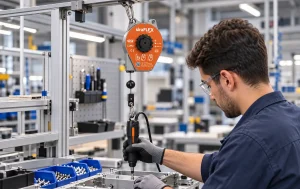
Torque wrenches are used in many sectors, including the automotive industry, the aerospace industry, and mechanical maintenance. This tool is essential for ensuring controlled tightening, as it allows for the application of a precise and repeatable torque, reducing the risk of damaging components or compromising the safety of assembled structures.
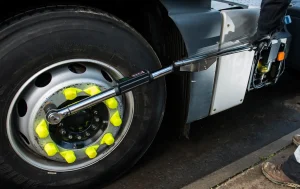
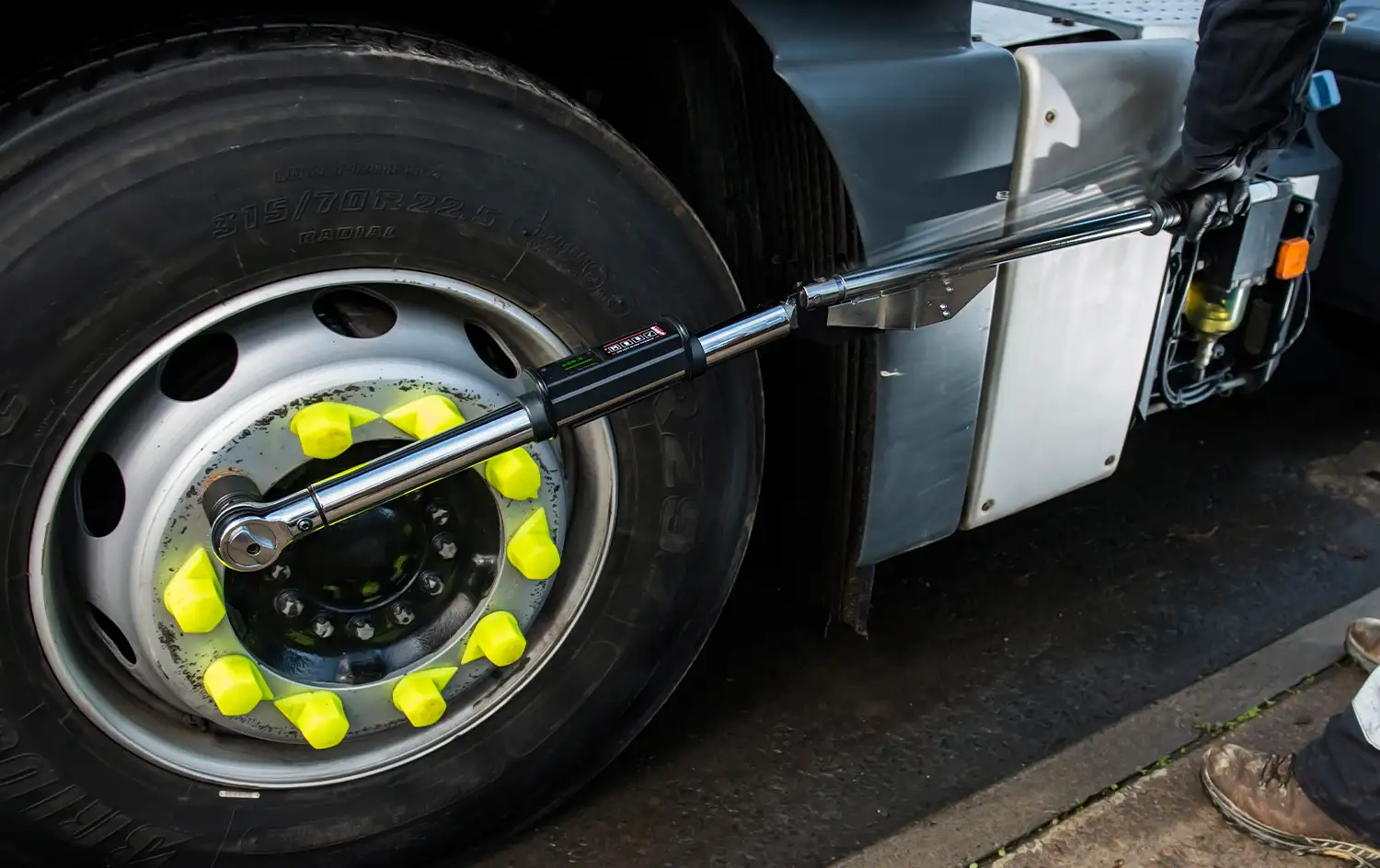
In the automotive industry, for example, it is used to install critical parts such as cylinder heads or wheels, where adhering to the specified torque is essential for the vehicle to function properly. Similarly, in the aerospace industry, the torque wrench is indispensable for ensuring the reliability of joints and structural connections.
What Features to Consider When Choosing a Torque Wrench
| Parameter | How to Evaluate It | Impact on the Choice |
| Torque Range | Determine the minimum and maximum torque for your process; the instrument must operate within 20–80% of its nominal range | Determines the size of the instrument |
| Required precision | ±4% for standard applications; ±2% or less for certified processes | Mechanics vs. Electronics; Accuracy Class |
| Data Traceability | Is it necessary? Just for monitoring, or integrated into the MES? | Key with data storage or system integration |
| Frequency of use | Occasional Use vs. Continuous Use in Shifts | Ruggedness, type of periodic calibration |
| Access to the joint | Available space, angle, depth | Configuration (straight, L-shaped, with extension) |
| Specific Application | Automotive, aerospace, heavy haulage, general MRO | Any dedicated software (e.g., Wheel-Torque for vehicles) |
Relevant Standards for Torque Wrenches
Torque wrenches are measuring instruments: as such, they are subject to calibration and qualification regulations. The main references are:
- ISO 6789-1 and ISO 6789-2: international standards that define the design requirements and verification procedures for manual torque wrenches. Any wrench used in a certified process must comply with these standards and be recalibrated in accordance with them.
- ISO 9001:2015 requires the periodic calibration of measuring instruments used in production processes. Torque wrenches fall into this category.
- IATF 16949 (automotive): requires MSA (Measurement System Analysis) for process control tools, including torque wrenches at critical workstations.
Through SIRA Service, SIRA S.p.A. offers certified periodic calibration of torque wrenches, including the issuance of a calibration report and updates to the measuring instrument log. This service is essential for maintaining ISO 9001 compliance and industry certifications.
Kanon, Crane Electronics, and BMS: Our Leading Brands
Kanon – Japanese Quality Since 1938
Kanon is a Japanese manufacturer specializing in torque wrenches and measuring instruments for industrial use. Founded in 1938, it is one of the world’s leading brands for manufacturing precision, durability, and reliability. The product line includes ratchet wrenches, pointer wrenches, electronic wrenches, and torque multipliers, with ranges from 0.5 Nm up to several kNm. Distribution in Italy is handled exclusively by SIRA S.p.A.
Crane Electronics – Process Traceability
Crane Electronics is a British manufacturer specializing in electronic torque wrenches with advanced data-logging capabilities. The Traceability models are specifically designed for processes where every tightening operation must be documented: they feature high-precision transducers (±1%), a backlit digital display, internal memory for thousands of tightening operations, and a communication interface for data export. The ideal solution for automotive and aerospace production lines, as well as any process subject to quality audits.
To provide further insight into the criteria for managing measuring instruments in quality management systems, ACCREDIA—the Italian accreditation body —has published technical guidelines on the calibration of industrial measuring instruments, including those used to measure torque.
BMS – Advanced digital technology for every torque control need
BMS Ireland has been in the industry for about 40 years and is now one of the leading manufacturers of digital torque measurement systems, with a product line that covers automotive assembly, aerospace, and vehicle maintenance.
BMS is distinguished by its incorporation of innovative technologies into torque tools: bright OLED displays, angle transducers, a transducer-based control system for the mechanical trigger, and patented breakaway wrenches. All models come standard with PCFE software (Windows-compatible) and a USB cable, and feature trace, peak, and 99 configurable presets/jobs.
How to Navigate the Different Brands: Kanon, Crane Electronics, and BMS
With three leading brands in our portfolio, choosing the right tool depends on a combination of the application context, the required level of traceability, and the specific needs of the industry. The following table provides a quick guide.
| Requirement | Recommended Brand | Reasoning |
| High mechanical precision, long service life, wide range | Kanon | Japanese engineering at its best, from 0.5 Nm to kNm |
| Advanced electronic traceability, data export, certified processes | Crane Electronics | Transducer ±1%, internal memory, USB/Bluetooth/Wi-Fi |
| OLED digital display, everyday use, ease of use | BMS SRW Series | Range 1–2,000 Nm, PCFE software included, 99 presets |
| Dual click-and-digital control, medium torque | BMS SRC Series | 20–160 Nm, click-stop adjustment with digital precision |
| Inspection of Wheel Nuts on Heavy Articulated Vehicles | BMS SRB Series | Wheel-Torque Software, Traceability by Vehicle VIN |
| Micro-enclosures for Electronics and Components | BMS SRMS Series | Starting at 5 cNm, OLED display, Bluetooth available |
Calibration and Maintenance: What You Shouldn’t Overlook
Regardless of the brand or type chosen, a torque wrench is a measuring instrument and, as such, must be calibrated periodically. The frequency depends on the intensity of use and the criticality of the process: as a general rule, for certified applications, at least one calibration per year or every 5,000 cycles is recommended (whichever comes first).
Trust SIRA S.p.A. for your custom torque wrench
When you choose SIRA S.p.A. for custom torque wrenches, you’re choosing an experienced and reliable partner in the field of measuring instruments. As a distributor of the leading brands Kanon and Crane Electronics, SIRA offers a complete range of torque wrenches that meet the highest standards of precision and traceability.
Thanks to dedicated technical support and certified calibration services, customers can ensure compliance with ISO and IATF standards, thereby guaranteeing the highest quality in their production processes. In addition, the wide variety of models available makes it possible to find the right wrench for every specific application, helping to improve operational efficiency and reduce the risk of errors during tightening.
CONTACT US NOWFAQ – Frequently Asked Questions About Torque Wrenches
How often should a torque wrench be calibrated?
How often should a torque wrench be calibrated? It is recommended to calibrate a torque wrench at least once every 12 months, but the frequency may vary depending on usage and applicable regulatory requirements. In critical work environments or for certified applications, calibration may need to be performed more frequently—even every 3–6 months—to ensure the instrument’s accuracy and reliability.
How long does a torque wrench last?
The lifespan of a torque wrench varies depending on its use and maintenance. In general, a well-maintained and properly used tool can last several years. However, it is essential to perform periodic inspections and calibrations to ensure accuracy and reliability over time. In particularly demanding work environments, the tool’s lifespan may be reduced if the guidelines for care and storage are not followed.
What are the units of measurement for torque?
The units of measurement for torque are primarily the newton-meter (Nm) in the International System of Units (SI), the kilogram-meter (kgm), and the foot-pound (ft-lb) in the imperial system.
Why is it important to use a torque wrench?
A torque wrench is essential for ensuring precise and controlled tightening, reducing the risk of damaging components and improving the safety of assembled structures. Using one ensures that specified torque values are met, preventing problems such as loosening or excessive stress on materials.
How much does a good torque wrench cost?
The cost of a torque wrench varies depending on the brand, type, and technical specifications. It is important to choose a model that meets the specific needs of your work to ensure optimal performance.