

Blog
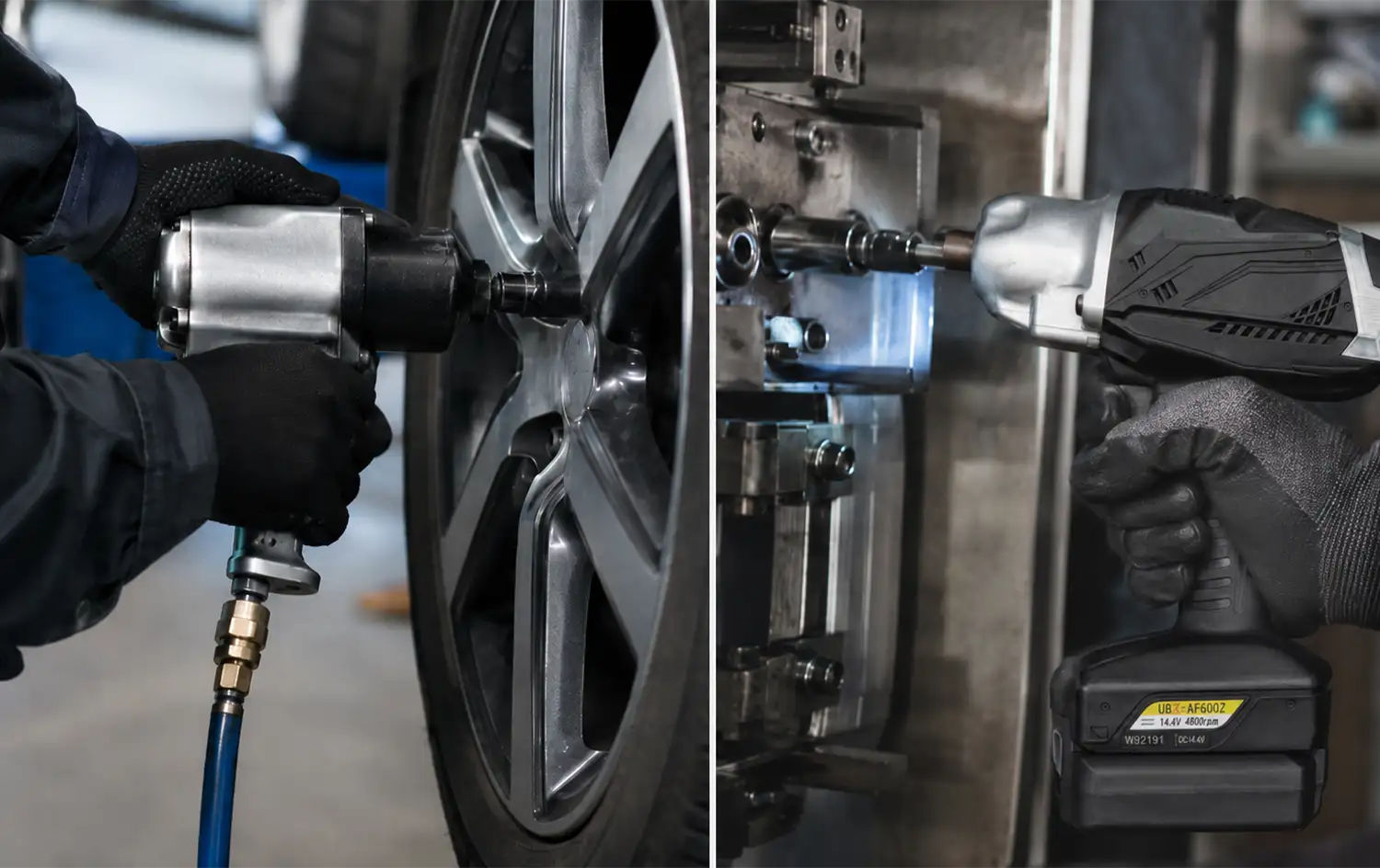
In the world of industrial assembly, choosing the right tools is never a trivial matter. One of the most common decisions faced by production managers, process engineers, technical departments, and professionals is whether to use a pneumatic screwdriver or an electronically controlled screwdriver .
There is no single answer. It depends on factors such as the production process, quality requirements, the industry, and the available infrastructure.
At SIRA S.p.A., with over 50 years of experience in industrial fastening and a portfolio that includes the world’s leading manufacturers—such as Uryu, Panasonic, Kilews, and Kuken—we know how to address this question based on the customer’s needs.
How does a pneumatic screwdriver work?
The operating principle of an industrial pneumatic screwdriver—one of the most widely used tools in industry—is based on the conversion of compressed air energy into rotational motion. A vane or piston motor is powered by a centralized compressed air supply, typically at a pressure between 5 and 6 bar, and transmits torque to the output shaft via an internal mechanical mechanism.
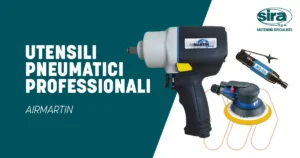
The most common models include impact wrenches (or pneumatic guns) and hydraulic impact wrenches, such as those in the Uryu series, for which SIRA S.p.A. is the official and exclusive distributor in Italy. This latter technology is particularly valued in applications where high torque must be applied while minimizing the reaction force on the operator, all while ensuring greater precision than traditional impact wrenches.
Advantages of Pneumatic Screwdrivers
- High power-to-weight ratio: they deliver significant torque while remaining lightweight
- The initial purchase cost is generally lower than that of controlled-burn systems
- Durability and reliability in harsh industrial environments
- High clamping speed: ideal for high-volume lines with low criticality
- Wide selection of models for torque ranges from a few Nm up to several hundred Nm
Limitations of Pneumatic Screwdrivers
- Electronic torque control: The final value depends on air pressure and wear on the mechanism
- The Need for a Compressed Air System
- Energy consumption is generally higher than that of power tools
- More limited process monitoring and traceability
- Torque drift over time if the instrument is not maintained regularly
| Technical Overview Uryu hydraulic impact wrenches combine precision Japanese technology with significantly reduced vibration and exceptionally reliable mechanical torque control in high-speed, high-volume production applications. |
Professional Applications of Pneumatic Screwdrivers
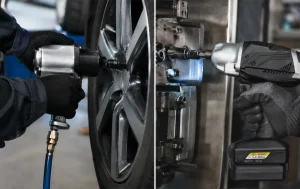
Pneumatic screwdrivers are widely used in a variety of professional settings, including maintenance shops, auto body shops, and tire shops.
- In workshops, these tools are essential for assembly and repair work, where tightening speed and durability are critical.
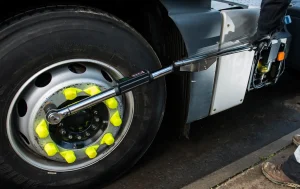
- Tire shops use pneumatic wrenches to mount and remove tires, ensuring a quick and efficient process.
- In auto body shops, pneumatic wrenches are used to assemble car parts, where precision and reliability in tightening are crucial.
In addition, regular maintenance of screwdrivers is important to ensure optimal performance and extend the tool’s service life
How does an electronically controlled screwdriver work?
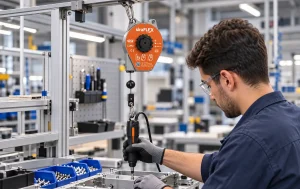
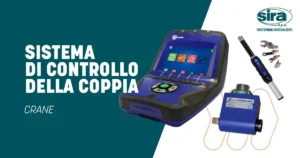
A controlled electronic screwdriver has a brushless electric motor that is balanced by an electronic unit that measures the applied torque in real time and, depending on the model, also the angle of rotation. These screwdrivers represent the natural evolution for all assembly processes in which the quality of the fastening must be documented, certified, or guaranteed within precise tolerances.
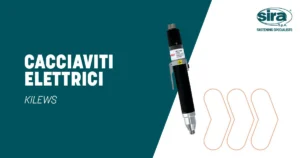
At the heart of these tools is the torque controller, which stops the tool or signals when the target value has been reached with an accuracy of up to ±3% or less. Brands such as Panasonic, Bosch, Estic, Kuken, and Kilews—all of which are part of our product portfolio—represent global excellence in this category.
Benefits of Electronically Controlled Screwdrivers
- Precise and repeatable torque control: essential for certified processes
- Complete traceability: Every fastening operation can be recorded, archived, and verified
- Compatibility with Industry 4.0 systems: data connectivity, OPC-UA, industrial protocols
- Reduction in scrap and rework: clamping is always within specifications
- Programming versatility: multiple clamping programs on a single tool
- Independence from the compressed air network: greater flexibility in setting up workstations
Limitations of electronic screwdrivers with control systems
- Higher purchase price compared to tires with the same torque rating
- Requires staff trained in programming and parameter management
- Slightly heavier in some models, especially those with a built-in controller
- Need for Periodic Maintenance on the Electronic System
- Reduced rotational speed
Head-to-Head Comparison: Tire vs. Electronic
| Feature | Pneumatic Screwdriver | Electronic Screwdriver Controlled |
| Principle of Operation | Compressed air | Electric motor + torque control |
| Torque Accuracy | ±10–20% (variable) | ±3–5% or less |
| Process Traceability | Generally unavailable | Complete (each recorded tightening) |
| Required Infrastructure | Compressed Air Network | Power Supply |
| Clamping speed | High | Adjustable (controlled) |
| Tool Cost | Low-Medium | Medium-High |
| Suitable for the automotive and aerospace industries | Non-critical applications only | Yes, industry standards |
| Industry 4.0 Connectivity | Absent or limited | Flood |
| Maintenance | Periodic Mechanics | Electronics + Mechanics |
| Energy Consumption | High-pressure (compressed air) | Contents (Brushless Motor) |
When to Choose a pneumatic screwdriver
The pneumatic screwdriver remains the best choice in a well-defined set of situations. First and foremost, high-volume assembly lines where tightening requirements are low or moderate—such as in auto body shops, furniture manufacturing, white goods, and general components. In these cases, the operating speed and low operating cost per unit produced make the pneumatic screwdriver a competitive choice.
It is also the preferred solution in MRO maintenance shops, where technicians work on a wide variety of fasteners without having to certify each individual tightening.
To learn more about the selection of pneumatic tools in our catalog, visit the relevant section of our website.
When to Choose an controlled electronic screwdriver
A torque-controlled electronic screwdriver is a must—not just a recommendation—in all processes where fastening quality is critical and must be documented. This applies primarily to the automotive and aerospace sectors: the quality standards of major OEMs (Original Equipment Manufacturers) require that every critical fastening operation be tracked by torque and angle, and that the data be archived and available for audits.
The same applies to the aerospace and defense sectors, where assembly protocols are even more stringent and traceability is a regulatory requirement. But also in industrial electronics and security systems, any joint where unplanned loosening could cause malfunctions or hazards requires a certifiable electronic monitoring system.
Maintenance of an electric screwdriver and pneumatic screwdriver
Maintenance of electronic and pneumatic screwdrivers is crucial for ensuring optimal performance and extending the tools’ service life.
For pneumatic screwdrivers, it is essential to regularly check the compressed air supply system, ensuring that there are no leaks in the hoses and fittings. Cleaning the air filters and using specific lubricants help maintain operational efficiency.
As for electronic screwdrivers, maintenance involves periodically checking the electronic system, with particular attention to torque calibration and inspecting the batteries or power sources.
It is recommended that you install software updates when they become available to ensure that advanced features function properly. In either case, regular maintenance reduces the risk of sudden malfunctions and ensures safe and effective operation.
Choose SIRA S.p.A. when purchasing an power screwdriver or pneumatic screwdriver
At SIRA S.p.A., we don’t just supply the tool. When a customer contacts us to evaluate which technology to adopt, our technical team analyzes the specific process so we can recommend a tool tailored to their needs. Only after a careful analysis do we make a recommendation.
This approach as a technical partner is what has set SIRA S.p.A. apart for over 50 years. We serve more than 1,200 Italian and international customers, with a qualified in-house team and a stock of original products and parts that is always available.
CONTACT US NOWFAQ – Frequently Asked Questions About electric screwdrivers or pneumatic screwdrivers
How does an impact driver work?
A pneumatic impact wrench operates using a mechanism that combines rapid pulses and high torque for efficient tightening. When the tool is activated, a motor generates a rotational motion that is transferred through an impact system, allowing torque to be applied in a controlled manner. This type of impact wrench is particularly useful in situations where screws or nuts need to be tightened quickly, while minimizing the risk of damaging materials. Its ability to deliver rapid pulses makes it ideal for high-intensity applications.
Best Brands Pneumatic screwdrivers?
The best brands of professional screwdrivers include well-known names such as Bosch, Panasonic, and Uryu. These manufacturers are renowned for the quality and reliability of their tools, offering a wide range of models suitable for various industrial and trade applications. Choosing a screwdriver from one of these brands ensures high performance and durability, which are essential for industry professionals. In addition, many of these brands also provide technical assistance and after-sales support.
What accessories are needed for a pneumatic screwdriver or an electric one?
To use a pneumatic or electronic screwdriver effectively, you need a few essential accessories. For pneumatic screwdrivers, it’s essential to have an adequate compressed air supply along with compatible hoses and fittings. For an electric screwdriver, spare batteries and various bits are important for adapting to the different tasks at hand.