

Blog
On an industrial assembly line, every pneumatic tool relies on a compressed air system. And every compressed air system relies, at its critical points, on a component that is often overlooked but essential: the quick-connect fitting.
A high-quality fitting ensures quick connection and disconnection, a reliable seal, no air leaks, and a long service life under heavy-duty conditions. A poor-quality fitting results in pressure losses, downtime, and unplanned maintenance.
Nitto Kohki and the Cupla Philosophy
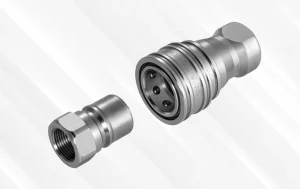
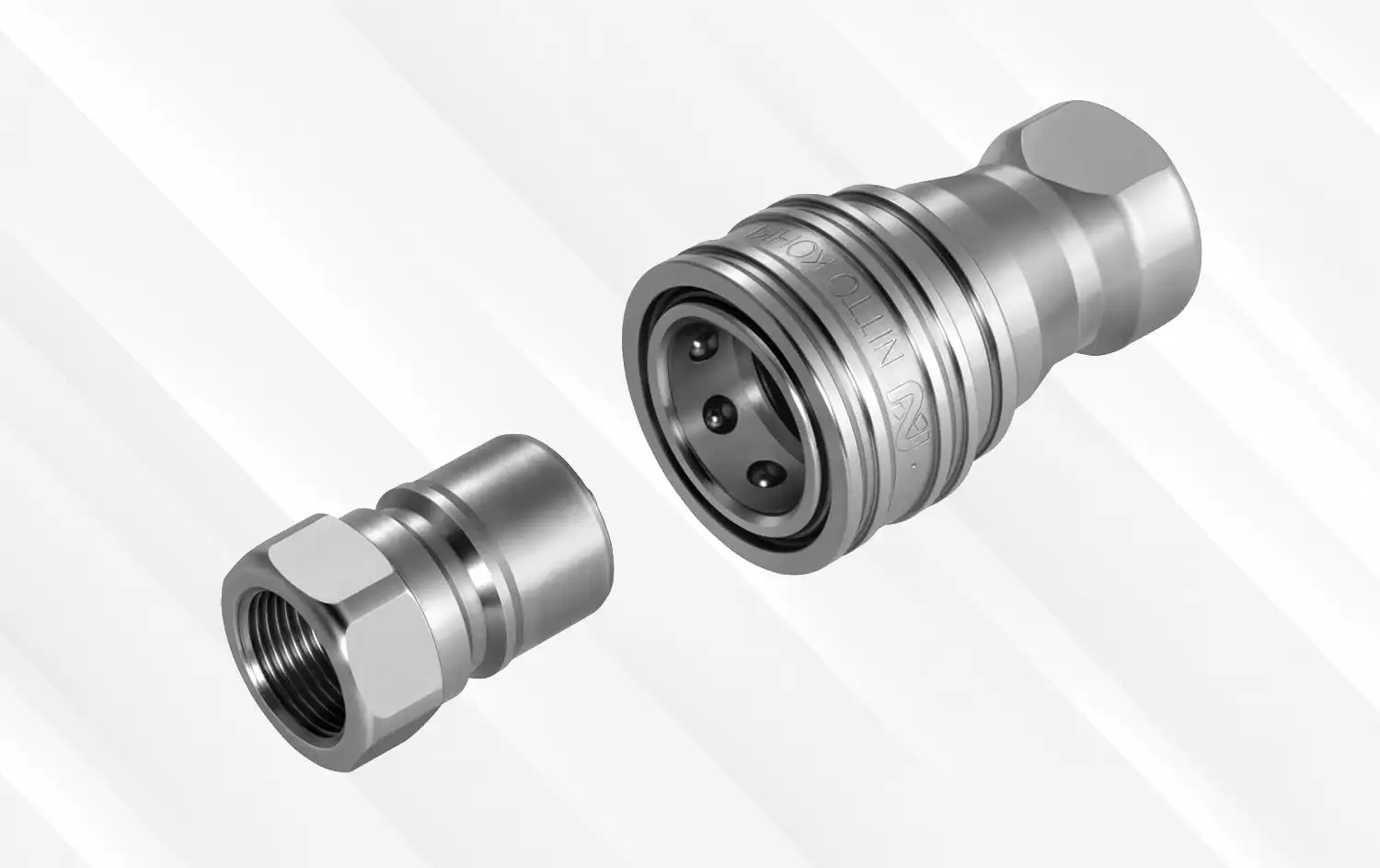
Nitto Kohki quick-connect compressed air fittings allow you to connect and disconnect hoses and tools with a single motion, without tools and with minimal air leakage. The automatic locking mechanism ensures a reliable seal during use.
Nitto Kohki’s design philosophy: Each product family is designed for a specific pressure range and application, with materials and seals selected based on the fluid and operating environment. The result is a broad yet cohesive product line, where each model has a specific place and a technical reason for existing.
The Nitto Kohki product line, distributed in Italy by SIRA S.p.A., is available on our website.
How a Nitto Kohki quick-connect fitting works
The operating principle of a Cupla quick-connect coupling is mechanically simple: the coupling consists of two parts— a plug and a socket—which connect with a single insertion motion and are released by pressing a ring or an external ring nut. Internally, a check valve ensures that air does not escape when the two parts are separated and that flow resumes immediately upon connection.
The operator can disconnect a tool while the system is still under pressure, without the compressed air escaping suddenly. This feature makes a significant difference in high-usage environments, both in terms of operator safety and the system’s energy efficiency.
The Cupla Series for Compressed Air
The Nitto Kohki product line is divided into distinct families based on flow rate and application. Understanding the differences is the first step in choosing the right fitting for your system and tools.
Hi Cupla – The Standard Coupling for Pneumatic Tools
The Hi Cupla is the most widely used family of couplings and the industry standard for connecting pneumatic tools to factory air systems. Designed for low pressure (up to approximately 10 bar), it is available in steel (for air) and brass or stainless steel, depending on the application. The Hi Cupla Ace variant is the lighter, plastic version, suitable for both air and water, and particularly popular where the weight of the connectors on the line is a factor.
Super Cupla – Lightweight Design for Handheld Tools
The Super Cupla is specifically designed for portable tools—such as screwdrivers, grinders, and air guns—where the weight of the coupling is a significant factor. Its aluminum body makes it significantly lighter than steel versions while offering the same performance, reducing operator fatigue during continuous use.
Full Blow Cupla – Maximum flow rate, minimal pressure drop
The Full Blow Cupla features a fully open-port valve that minimizes pressure drop during airflow. This design allows for a significantly higher flow rate for the same diameter compared to standard compressed air fittings, reducing the required supply air volume and lowering the compressor’s energy consumption. The ideal choice for high-air-consumption tools or lines where pressure drop is an operational issue.
SP Cupla Type A – Versatility for Different Fluids
The SP Cupla Type A is Nitto Kohki’s coupling for applications beyond compressed air: water, hydraulic oils, and chemicals. Designed for working pressures ranging from 15 to 75 bar, it is available in brass, stainless steel, and steel, with NBR, FKM, or EPDM seals depending on the fluid. Sizes range from 1/8″ to 2″. The dual check valve design prevents fluid leakage on both the line side and the tool side during disconnection, which is essential for fluids other than air.
Why the Choice of Fitting Matters: Impact on Performance and Costs
A quick-connect fitting might seem like a trivial, small, or inexpensive component—one that is often purchased without much thought. In reality, when managing an industrial pneumatic system, the quality and proper selection of compressed-air fittings have a direct impact on three critical operating parameters.
1. Pressure Drop and Energy Consumption
Every fitting introduces flow resistance, which results in a pressure drop. A poorly sized or poorly constructed fitting can cause a pressure loss of 0.5–1 bar between the supply line and the tool, enough to significantly degrade its performance. Nitto Kohki’s Full Blow Cupla is specifically designed to minimize this loss; choosing the correct diameter (a fitting size appropriate for the tool’s required flow rate) is the second factor. It is estimated that leaks in fittings and connections account for an average of 20–30% of total compressed air consumption in a poorly managed industrial network.
2. Reliability and Downtime
A fitting that leaks—even slightly—is a fitting that will wear out sooner than expected and will most likely cause a shutdown. Nitto Kohki compressed air fittings are designed to withstand thousands of connection/disconnection cycles while maintaining a consistent seal. The build quality of the locking mechanism and internal seals directly determines the component’s service life.
3. Operator Safety
The double check valve in the fittings ensures that no sudden release of compressed air occurs when the connection is disconnected, which poses a real risk to operators, especially at pressures above 6 bar. Workplace safety regulations for environments with pneumatic systems, including the Italian reference to the Legislative Decree No. 81/2008 (Consolidated Law on Safety) , require that the components of the pneumatic system ensure operator safety under all operating conditions, including when the system is disconnected while under pressure.
How to Choose the Right Nitto Kohki Fitting
Selecting the right fitting requires answering four key questions:
| Question | Technical variable | How does this affect the decision? |
| Which fluid? | Air, water, oil, chemicals | Determine the material of the body and the gaskets |
| What is the operating pressure? | Maximum pressure in bar | Determine the family (low, medium, high pressure) |
| What is the required capacity? | L/min or m³/h of the tool | Determine the size of the fitting |
| Which operating environment? | Workshop, food, medical, chemical | It can target specific families (Hygienic, Mold, etc.) |
Why Choose SIRA S.p.A. for Custom-Made Compressed Air Fittings
At SIRA S.p.A., we distribute Nitto Kohki quick-connect compressed air fittings, a range that covers pressures from low to over 700 bar, fluids ranging from compressed air to water to hydraulic oils, and applications ranging from assembly shops to more specialized fields such as the medical, pharmaceutical, and injection molding industries.
The technical team at SIRA S.p.A. can help you select the right fitting based on your system’s specifications. To request information or view the complete Nitto Kohki catalog, visit the relevant section or contact us.
CONTACT US NOWFAQ – Frequently Asked Questions About Nitto Compressed Air Fittings
What are the main types of compressed air fittings?
The main types are: quick-connect fittings, which allow tools to be connected and disconnected with one hand; slip-on fittings, in which the hose is slipped onto the hose fitting and secured by an external nut; and hose clamps.
The compressed air fittings Are Nitto Kohki Cupla fittings compatible with fittings from other brands?
Not necessarily. Quick-connect fittings are not universally interchangeable: the sizes of the connectors and valves vary by manufacturer and product line. To ensure compatibility, you must use a plug and socket from the same manufacturer and the same product line.
How often should Cupla fittings be replaced?
It depends on the frequency of use and operating conditions. Nitto Kohki couplings are designed to withstand thousands of connection cycles. Signs that replacement is needed include: audible air leaks at the connection, difficulty connecting or disconnecting, and visible signs of wear on the seals or the body. SIRA S.p.A. keeps the most common sizes in stock for quick replacement.