

Blog
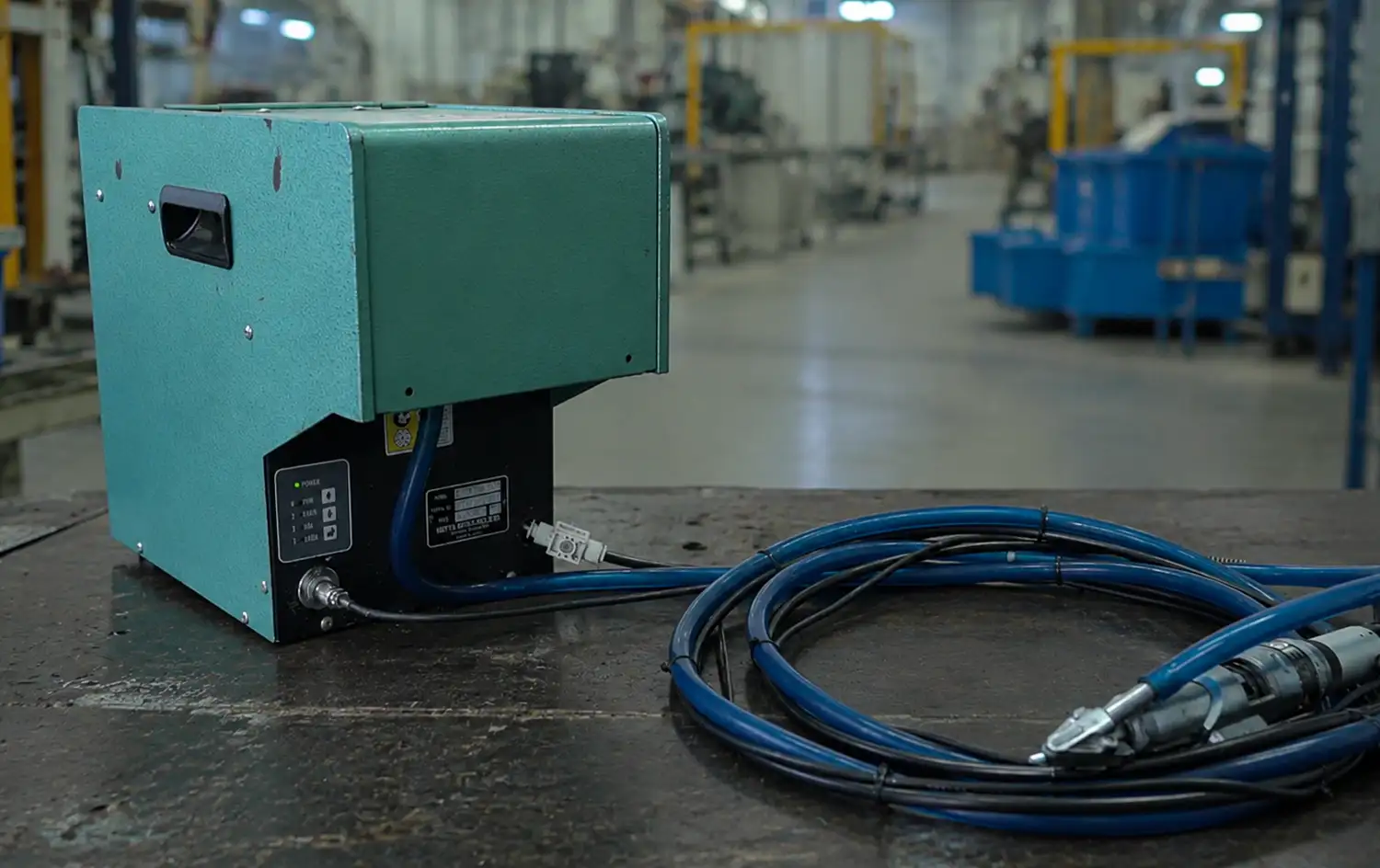
In the world of automated industrial assembly, screw feeding is one of the critical links in the production chain. Every second lost picking up a screw from the container, positioning it on the tool, and checking its orientation is a second of inefficiency repeated millions of times a year. Automated screw feeding systems eliminate this inefficiency at its source: the screw arrives at the tool already oriented, already positioned, and ready for tightening.
At SIRA S.p.A., we distribute screw feeding systems Nitto Seiko, a Japanese manufacturer founded in 1938 and a global leader in this technology, integrating them into the automated screwdriving solutions developed by our Siratec division.
What are automatic screw feeding systems?
Automatic screw feeding systems are industrial solutions designed to transport, orient, and position screws fully automatically, eliminating the need for an operator or robot to handle each screw manually. The screw travels from the feed hopper to the screwdriver head in a continuous sequence, without any manual interruptions.
The operating cycle of these systems consists of distinct phases, designed to integrate into semi-automatic assembly stations or robotic production lines:
- Loading and Orientation: The screws are fed in bulk into a hopper or a circular feeder. The system—whether vibrating or rotary—aligns them all in the same direction before they move along the conveyor path.
- Sorting: A mechanical sorter intercepts and rejects screws that are not positioned correctly, allowing only those with the correct orientation to continue through the line.
- Pneumatic transfer: A jet of compressed air propels the screw through a transparent tube directly to the tip of the screwdriver in a fraction of a second.
- Tightening: When the operator pulls the trigger, or the robot starts the cycle, the screw is already in position and ready to be tightened to the set torque, without any intermediate steps.
Available Nitto Seiko Power Supplies
FM Series – Tilting Blade Feeders (FM503H, FM801H)
Tilting-blade feeders are the most common solution for the automatic feeding of standard screws. The operating principle is simple and effective: a vibrating blade picks up the screws from the hopper and orients them correctly so they fall into the feed tube. The FM503H and FM801H models cover different screw ranges and differ in hopper capacity and feed rate.
The FM series is particularly appreciated for its ease of setup when changing screw formats: replacing the limit switch and adjusting the orientation channel can be done without specialized tools, reducing production changeover times.
SH Series – SH Auxiliary Loader (SH300, SH801)
The SH series integrates a tilting blade feeder with an additional screw feeder, increasing the system’s operating time without the need for frequent stops to replenish supplies. The SH300 and SH801 models are designed to work in tandem with the FM series screwdriving motors, ensuring a continuous supply of screws suitable for high-volume production lines. Both models are documented with 2D and 3D drawings on the SIRA S.p.A. website.
Semi-Automatic Feeders
- NJ and NJR Series – Ohtake Automatic Feeders for Standard Screws
The NJ series (and NJL variant) and NJR series (with NJRL variant) comprise a range of automatic screw feeders in standard sizes, designed for compact integration into semi-automated manual assembly stations. The modular design allows the feeder to be configured with different outlet channel lengths; the model code includes the specific dimensions to adapt to the geometry of each workstation.
The NJR series is the robotic version, which is useful when the workstation configuration requiresthe screwdriver to move in and pick up the screw from a fixed position. Both series are available with complete downloadable 2D/3D documentation.
- SS Series – Compact Power Supplies for Special Applications
The SS Series is a family of compact power supplies designed for applications where space is limited or the installation site requires a power supply with a minimal footprint. The more compact design does not compromise operational reliability: the screw selection and orientation mechanism is the same as that of the larger series, but in a smaller format.
- OM-26 Series – Ohtake High-Capacity Power Supplies
For very high-volume production lines that require long intervals between refills, the OM-26 series offers a large-capacity hopper, available in the OM-26M (standard) and OM-26R (robot) models, which drastically reduces the frequency of operator intervention for screw loading. Ideal for continuous, two-shift lines where every stop for refilling represents a direct cost.
- NSB and NSR Series – Belt Feeding Systems
The NSB and NSR series represent a different approach to automatic feeding: instead of a vibrating hopper, they use a feed belt that allows for the handling of non-standard or particularly delicate screws that vibrating hopper systems might damage. They are suitable for screws with special coatings, non-standard heads, or materials sensitive to vibration.
| Series | Models | Principle | Strength |
| FM | FM503H, FM801H | Tilting blade | Versatility and ease of format change |
| SH | SH300, SH801 | Additional magazine | Long battery life for continuous operation |
| NJ/NJR | NJ-xxxx, NJL, NJR, NJRL | Standard Semi-Automatic Feeder | Compact integration, modularity |
| SS | SS-XXXX | Compact | Workstations with limited space |
| OM-26 | OM-26M, OM-26R | Large capacity | High volume, fewer refueling stops |
| NSB/NSR | NSB-xx, NSR-xx | Ribbon | Delicate screws or non-standard sizes |
Technical Documentation All Nitto Seiko models distributed by SIRA S.p.A. are accompanied by technical data sheets in PDF format, 2D drawings in DXF format, and 3D models in STP and IGES formats. The files are ready to be imported into major CAD software for integration design. |
How do Nitto Seiko screw feeding systems work?
A Nitto Seiko system is not a standalone component: it is part of an integrated fastening system that includes the feeder, the fastening motor ( Estic ENRZ series, shown in the Automation section of the website), the clamping head, and the process controller. SIRA S.p.A. supplies all these components and, through its Siratec division, integrates them into complete turnkey solutions.
The operating cycle of a complete Nitto Seiko system is as follows:
- Loading screws into the hopper: The operator loads the loose screws into the feeder’s hopper; the system automatically orients them
- Transport to the clamping point: The selected screw is transported through a flexible hose to the screwdriver, either by gravity or compressed air
- Tool retention: The screw is held in place at the screwdriver’s chuck by a vacuum or mechanical system
- Tightening: The screwdriver tightens the screw according to the programmed parameters (torque, angle, speed)
- Verification: The inspector verifies that the tightening is within specifications and indicates OK/NOK
- Next cycle: The feeder automatically feeds the next screw
What technical specifications should you consider when choosing an automatic feeder?
Selecting the most suitable power supply model requires an analysis of several key technical variables:
| Parameter | How does this affect the choice? | Who defines it |
| Screw Diameter (M) | Determine the dimensions of the guide channel and the tube | Project / Engineering Department |
| Screw Length | It affects the selector’s geometry and the feed rate | Project / Engineering Department |
| Screw head (type) | Some heads require power supplies with specific selectors | Project / Quality |
| Required cycle rate (screws/min) | Determines the feeder speed and the hopper capacity | Production / Time and Methods |
| Required Fuel Tank Range | It determines the tank capacity and the refueling frequency | Production / Logistics |
| Screw Material/Coating | Fragile or coated screws may require belt feeders | Quality / Project |
For any technical evaluation, the SIRA S.p.A. team is available to assist you in selecting the right model based on your process specifications.
CONTACT US NOWFAQ – Frequently Asked Questions About Automatic Screw Feeding Systems
What are the main components of an automatic screw feeder?
The main components of an automatic screw feeder are the storage and sorting system (hopper or vibrating bowl), the single-screw feeding device (selector or tilting blade), and the pneumatic or mechanical conveying system.
What are automatic screw feeding systems in industry?
Automatic screw feeding systems are designed to eliminate manual handling and speed up assembly cycles, thereby reducing costs and eliminating positioning errors. Their key functions include continuous feeding, mechanical orientation, and rapid workpiece transfer.
What are the safety regulations for automatic feeding systems?
Safety regulations for automatic feeding systems are primarily based on the Machinery Directive 2006/42/EC (transposed into Italian law by the Legislative Decree 17/2010), which will be replaced in 2027 by the new Machinery Regulation (EU) 2023/1230, and to the harmonized technical standards for electrical equipment and functional safety